

🌍 Energy and the Environment
The Urgency of Acting to Protect Our Climate
HydroAfricaEnergy
2/25/20262 min read
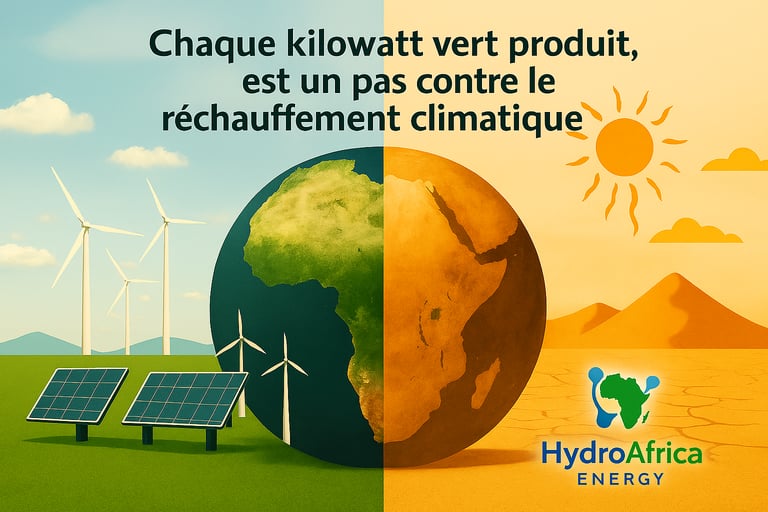
If greenhouse gas emissions do not decrease, climate degradation will continue relentlessly. Prolonged droughts, floods, extreme heatwaves, food insecurity, and energy crises will become increasingly frequent.
In the face of this reality, one conviction stands out: the transition to green energy is no longer a choice, but a strategic necessity for our African countries.
🔥 The Direct Link Between Energy and Climate Change
The energy sector is currently one of the main contributors to global greenhouse gas emissions. The combustion of coal, oil, and gas to produce electricity, power industries, and fuel transportation releases significant amounts of carbon dioxide (CO₂).
These emissions cause:
Rising global temperatures
Disruption of agricultural cycles
Intensification of extreme weather events
Sea level rise
Africa, although minimally responsible for historical emissions, is one of the continents most vulnerable to the consequences of climate disruption.
🌱 Green Energy: A Sustainable and Strategic Solution
To reverse this trajectory, the development of renewable energy represents a concrete and effective response.
☀️ Solar Energy
Africa has one of the highest solar potentials in the world.
Solar energy enables:
Electrification of rural areas
Reduction of dependence on energy imports
Creation of local jobs
Significant reduction in CO₂ emissions
Today, it stands as one of the major pillars of Africa’s energy transition.
🌬 Wind Energy
Coastal and Sahelian regions offer strong wind potential.
Wind energy:
Complements solar production
Stabilizes electricity grids
Diversifies the energy mix
Reduces dependence on fossil fuels
💧 Hydropower
Already developed in several African countries, hydropower remains an important source of clean energy when implemented sustainably and with respect for ecosystems.
It offers:
Stable production
Natural storage capacity through dams
Low-carbon electricity generation
🌿 Biomass
Biomass involves producing energy from organic materials: agricultural residues, forestry waste, household waste, or industrial by-products.
It allows:
Waste valorization
Electricity and biogas production
Reduction of environmental pollution
Support for the local circular economy
When properly managed, it can play a key role in rural and agricultural areas.
💚 Green Hydrogen
Green hydrogen is produced through water electrolysis powered by renewable electricity.
Its advantages include:
Zero CO₂ emissions during use
Large-scale energy storage
Strategic industrial applications
Export potential to international markets
It represents a major opportunity for the continent’s green industrialization.
⚪ Natural Hydrogen (White Hydrogen)
Natural hydrogen, also known as white hydrogen, represents a major energy discovery.
Unlike green or grey hydrogen, it occurs naturally underground and does not require industrial processes for production.
Through Hydroma Inc, led by Malian businessman Aliou Boubacar Diallo, the world became aware that this decarbonized energy source exists naturally and in commercially exploitable quantities.
Its prospects are considerable:
Low-carbon energy source
Potentially competitive costs
A new African industrial sector
Strengthened energy sovereignty
Natural hydrogen could therefore become a major strategic asset in Africa’s energy mix.
🌍 Environmental and Economic Stakes
Investing in green energy is not only about protecting the environment. It also means:
Stimulating economic growth
Creating sustainable jobs
Reducing national energy bills
Strengthening energy sovereignty
Attracting international investment
The energy transition is therefore a powerful driver of development.
⚡ Africa Facing a Historic Opportunity
The global energy transition offers Africa a unique opportunity: to directly build a modern, clean, and resilient energy model, without repeating the mistakes of economies heavily dependent on fossil fuels.
Our countries can:
Massively develop renewable energy
Valorize their strategic natural resources
Encourage local innovation
Implement ambitious incentive policies
Train a new generation of energy specialists
🌍 Conclusion: Changing Course Now
If greenhouse gas emissions do not decrease, climate degradation will continue. But the future is not fixed.
By resolutely committing to the development of solar, wind, hydropower, biomass, green hydrogen, and natural hydrogen, we can:
✔ Reduce our environmental impact
✔ Strengthen our energy autonomy
✔ Stimulate economic development
✔ Protect future generations
Africa has the potential.
Innovation is here.
The will must follow.
🌿 HydroAfricaEnergy
Informing, raising awareness, and promoting sustainable energy solutions for a clean, innovative, and sovereign Africa.