

🌍 Environmental Impact
Energy Choices Matter
HydroAfricaEnergy
2/26/20262 min read
The energy model we choose today will determine the quality of our environment tomorrow.
In the face of climate, economic, and social challenges, one reality is clear: energy choices are not neutral. They have direct consequences for our planet and our future.
Africa, experiencing rapid demographic and economic growth, faces a strategic decision: continue pursuing a fossil fuel-based model or accelerate the transition toward sustainable renewable energy.
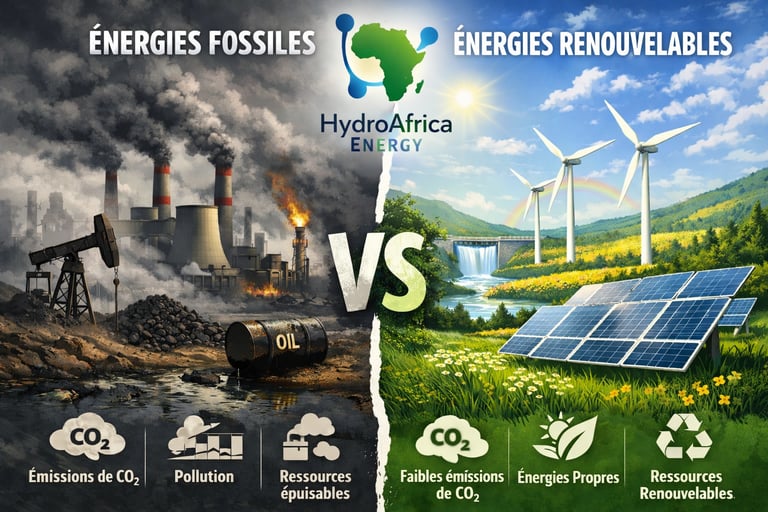
🔥 Fossil Fuels: A High Environmental Cost
Fossil fuels (coal, oil, natural gas) have long dominated global industrial development. They enabled the rapid industrialization of many economies, but their environmental impact is considerable.
❌ High CO₂ Emissions
The combustion of fossil fuels is the primary source of carbon dioxide (CO₂) emissions, the main driver of global warming.
These emissions contribute to:
Rising global temperatures
Increased droughts and floods
Ecosystem degradation
Agricultural disruption
❌ Air, Water, and Soil Pollution
Beyond CO₂, the extraction and combustion of fossil fuels result in:
Air pollution (fine particles, nitrogen oxides, sulfur compounds)
Groundwater contamination
Soil degradation
Increased public health risks
Environmental and health costs often outweigh short-term economic benefits.
❌ Finite and Depletable Resources
By definition, fossil fuels are non-renewable. Excessive exploitation leads to:
Progressive depletion of reserves
Dependence on imports
Price volatility on international markets
Increased energy insecurity
This model is neither sustainable nor stable in the long term.
🌱 Renewable Energy: A Sustainable Alternative
In response to these challenges, renewable energy offers a credible, clean, and strategic solution.
✅ Low CO₂ Emissions
Solar, wind, hydropower, biomass, and emerging solutions such as green or natural hydrogen produce very low emissions during operation.
They enable:
Reduction of national carbon footprints
Contribution to international climate commitments
Mitigation of global warming
✅ Clean and Sustainable Sources
Unlike fossil fuels, renewable energies rely on natural resources:
The sun
The wind
Water
Organic matter
These resources are clean and widely available across the African continent.
✅ Naturally Replenishing Resources
The sun rises every day.
The wind continues to blow.
Water cycles renew themselves.
These energy sources do not deplete on a human timescale. They ensure long-term sustainable production.
🌍 Why the Energy Transition Is Strategic for Africa
The energy transition is not an ideological option. It is a strategic necessity for Africa and for our planet.
Investing in renewable energy means:
🔹 Protecting our environment
Reducing pollution and preserving ecosystems.
🔹 Strengthening energy independence
Limiting dependence on fossil fuel imports and stabilizing economies.
🔹 Stimulating growth and local employment
Developing domestic industrial sectors and creating sustainable jobs.
🔹 Preparing a sustainable future for the next generations
Ensuring a healthy environment and accessible energy for the future.
⚡ A Decisive Moment for the Continent
Africa possesses exceptional solar, wind, and hydropower potential. It can choose to become a global leader in clean energy rather than replicate a polluting energy model inherited from the past.
Today’s energy choices will determine:
The air our children breathe
The stability of our economies
The resilience of our agricultural systems
The energy sovereignty of our nations
🌱 Conclusion: The Energy Future Is Built Today
The debate is no longer between development and the environment.
The real challenge is choosing sustainable development.
Fossil fuels belong to the industrial past.
Renewable energy represents the strategic future.
Africa has the opportunity to write a new energy chapter — cleaner, more innovative, and more sovereign.
🌍 The energy future is being built today.
And it depends on the decisions we make now.
🌿 HydroAfricaEnergy
Informing, raising awareness, and promoting sustainable energy solutions for a clean, innovative, and sovereign Africa.