

☀️ Solar Energy in Africa
A Strategic Driver of the Energy Transition
HydroAfricaEnergy
2/21/20262 min read
🌍 Africa, the Continent of the Sun
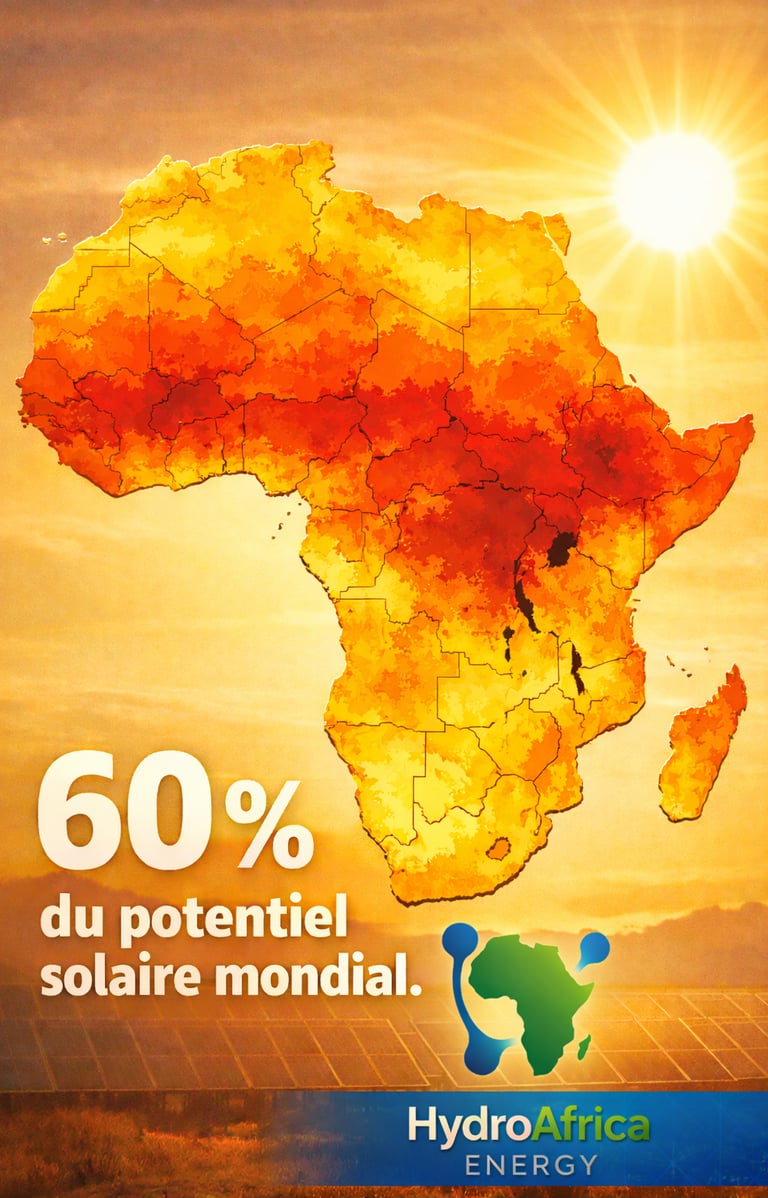
Africa is the sunniest continent in the world. According to the International Energy Agency (IEA), Africa holds 60% of the world’s best solar resources, yet it still accounts for only a small share of global installed solar capacity.
With average solar irradiation exceeding 2,000 kWh/m² per year in many regions, the potential is immense. Yet more than 500 million Africans still lack access to reliable electricity.
Solar energy therefore emerges as a natural, strategic, and sovereign solution for the continent.
⚡ Why Is Solar a Historic Opportunity for Africa?
1️⃣ A Response to the Energy Deficit
Many African countries face fragile or insufficient electricity grids. Solar energy enables:
Electrification of rural areas through mini-grids
Deployment of home solar kits
Energy autonomy for SMEs and industries
Unlike thermal power plants, solar installations can be deployed rapidly and at lower cost.
2️⃣ A Dramatic Drop in Costs
According to the International Renewable Energy Agency (IRENA), the cost of solar electricity has fallen by more than 80% over the past decade.
As a result, in several African countries, solar power is now the cheapest source of electricity generation.
3️⃣ A Direct Impact on Development
Access to electricity transforms:
🏥 Healthcare centers
🎓 Schools
🌾 Agriculture (solar irrigation)
🏭 Small local industries
Solar energy does not only generate electricity — it generates economic and social development.
📈 Solar Momentum in Africa
Several countries are accelerating their transition:
Morocco with the Noor Ouarzazate Solar Complex
South Africa with its REIPPPP program
Senegal, Kenya, Egypt, and others are multiplying photovoltaic power plants
The continent’s installed solar capacity now exceeds 20 GW, and investments continue to grow.
🔋 Challenges to Overcome
Despite its potential, Africa’s solar sector faces several obstacles:
Limited access to financing
Regulatory instability in some countries
Lack of storage infrastructure
Dependence on imported equipment
For solar to become a true energy pillar, it is essential to strengthen:
Public-private partnerships
Local equipment manufacturing
Technical training
Stable legal and regulatory frameworks
🌱 The Role of HydroAfricaEnergy
HydroAfricaEnergy is committed to:
Promoting solar innovations in Africa
Highlighting local actors in the energy transition
Raising awareness of renewable energy economic opportunities
Encouraging sustainable investment
Solar energy is not simply an alternative source of power.
It represents a strategic opportunity for African energy sovereignty.
The time has come.
Africa must not merely consume the energy of the future.
It must produce it, export it, and become a global leader.
The sun shines abundantly across the continent.
It is time to turn it into a driver of prosperity.